
Introduction
Tomato Paste Export from Iran continues to play a significant role in the country’s agricultural and food export industry. Despite economic fluctuations, international sanctions, and changes in global trade conditions, Iran remains one of the world’s leading producers and exporters of high-quality tomato paste.
With abundant tomato production, competitive manufacturing costs, and decades of experience in food processing, Tomato Paste Export from Iran continues to supply international markets with premium-quality products in a wide variety of packaging formats.
Among the companies actively contributing to this industry, Geranaz has established itself as a trusted exporter with more than a decade of experience in manufacturing and supplying tomato paste to regional and international markets.
Geranaz – A Trusted Iranian Tomato Paste Exporter
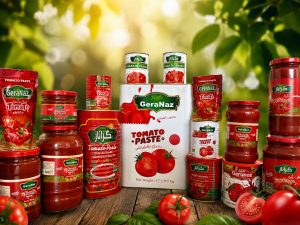
Geranaz specializes in the production and export of premium-quality tomato paste in a wide variety of packaging solutions designed to meet the requirements of different international buyers.
Available packaging options include:
- Metal Cans
- Glass Jars
- Sachets
- Bulk Drums
- Aseptic Packaging
This product diversity enables the company to serve wholesalers, food manufacturers, retailers, private-label brands, and industrial buyers across multiple international markets.
Despite recent economic challenges and international sanctions, Geranaz has continued expanding its export activities by adopting flexible business strategies, optimizing supply chain management, and identifying new export destinations.
Today, the company maintains long-term commercial relationships with customers in numerous countries by focusing on product quality, reliable delivery, and customer satisfaction.
Commitment to International Quality Standards
These quality standards have helped Tomato Paste Export from Iran earn a strong reputation among international buyers seeking reliable food products.
Maintaining consistent product quality is one of the key principles behind Geranaz’s export strategy.
The company applies strict quality-control procedures throughout every stage of production, from raw material selection to final packaging.
Modern processing technologies and advanced production lines ensure that every batch of tomato paste offers:
- Standard Brix concentration
- Natural tomato color
- Rich flavor
- Excellent consistency
- Long shelf life
- Compliance with international food safety regulations
These quality standards allow Geranaz products to meet the requirements of importers in both regional and global markets.
Integrated Supply Chain Management
One of Geranaz’s competitive advantages is its fully integrated value chain.
The production process begins with carefully selected tomatoes sourced from trusted farms before moving through industrial processing, quality inspection, export packaging, and international logistics.
This integrated approach provides several important benefits:
- Consistent raw material quality
- Reliable production capacity
- Efficient inventory management
- Faster order fulfillment
- Stable product quality throughout the year
For international buyers, supply reliability is just as important as product quality.
A well-managed supply chain is one of the key reasons why Tomato Paste Export from Iran remains highly competitive in global markets.
Export Packaging Designed for International Transportation
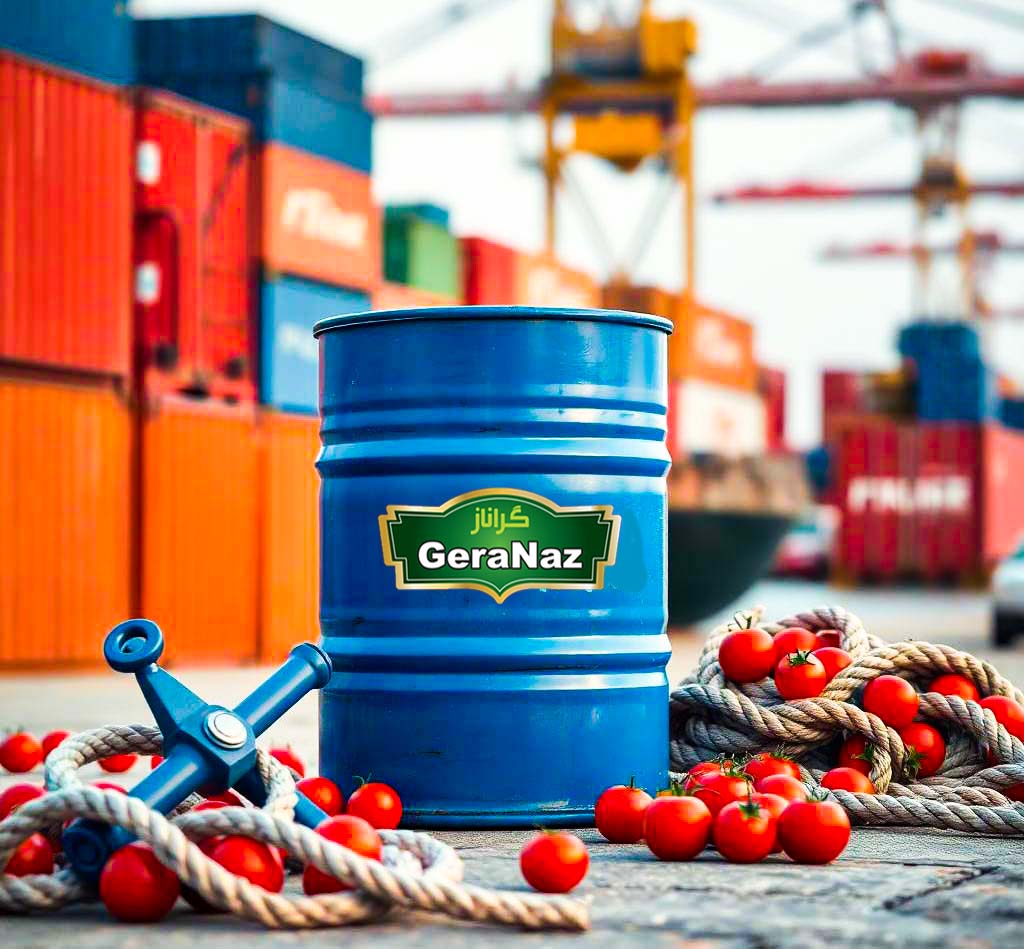
Packaging plays a critical role in protecting tomato paste during international transportation.
Geranaz uses export-grade packaging specifically designed to withstand long-distance shipping by both sea and land.
Proper packaging helps preserve:
- Product freshness
- Natural color
- Flavor
- Food safety
- Product integrity throughout the supply chain
High-quality packaging plays a vital role in protecting Tomato Paste Export from Iran during long-distance international transportation.
Whether customers require retail packaging or industrial bulk shipments, every product is prepared according to international export standards.
Building Long-Term Business Partnerships
In today’s competitive international food industry, export success depends on much more than manufacturing high-quality products.
International buyers increasingly expect:
- Reliable supply
- Transparent business practices
- Fast communication
- Flexible production capacity
- On-time delivery
- Compliance with customs regulations
- International certifications
Geranaz has built its business model around these principles, positioning itself as a dependable long-term partner for food importers, distributors, and manufacturers worldwide.
Rather than focusing solely on individual transactions, the company aims to establish sustainable commercial relationships based on trust, consistency, and mutual growth.
Building long-term partnerships continues to strengthen Tomato Paste Export from Iran in highly competitive international markets.
Future Vision
Looking ahead, Geranaz continues investing in international expansion by entering new export markets, strengthening the reputation of Iranian food products, and increasing exports of higher value-added tomato paste products.
The company’s long-term strategy is built on three core principles:
- Quality
- Innovation
- Customer Commitment
By continuously improving production efficiency, packaging technology, and international services, Geranaz aims to strengthen its position as one of Iran’s leading tomato paste exporters.
Tomato Paste Export in Iran
Iran is recognized as one of the world’s major producers of tomatoes, making tomato paste one of the country’s most important processed agricultural exports.
Favorable climate conditions, extensive agricultural production, and modern processing facilities enable Iran to manufacture large quantities of high-quality tomato paste every year.
As global demand for processed food continues to grow, Iranian tomato paste remains highly competitive due to its excellent quality, attractive pricing, and flexible packaging options.
However, recent economic conditions, exchange rate fluctuations, and international sanctions have introduced new challenges for exporters.
Understanding these market conditions is essential for companies seeking sustainable growth in international markets.
Current Status of Tomato Paste Export from Iran
Iran is among the world’s leading producers of tomatoes and has developed a strong processing industry capable of supplying high-quality tomato paste to international markets.
Today, Tomato Paste Export from Iran continues to grow as international buyers seek reliable suppliers offering competitive prices, consistent quality, and flexible packaging solutions.
Every year, millions of tons of fresh tomatoes are harvested across the country, with a significant portion processed into tomato paste for both domestic consumption and export.
The combination of favorable climate conditions, experienced manufacturers, and competitive production costs has enabled Iran to become one of the most reliable suppliers of tomato paste in the Middle East.
Today, Iranian tomato paste is exported in various packaging formats, including:
- Metal cans
- Glass jars
- Sachets
- Bulk steel drums
- Aseptic packaging
This flexibility allows exporters to meet the needs of wholesalers, retailers, food manufacturers, and private-label brands worldwide.
Global Demand for Iranian Tomato Paste
Tomato paste is one of the most widely consumed processed food ingredients in the global food industry.
The continuous growth of Tomato Paste Export from Iran reflects the country’s strong production capacity and increasing demand from international food manufacturers.
It is extensively used in:
- Ketchup production
- Pasta sauces
- Pizza sauces
- Ready meals
- Canned foods
- Soups
- Meat products
- Industrial food manufacturing

The growing food processing industry continues to increase demand for Tomato Paste Export from Iran across regional and international markets.
Because of its rich flavor, natural color, and long shelf life, demand for premium-quality tomato paste continues to increase in many international markets.
Iranian tomato paste has earned a strong reputation due to:
- High tomato concentration
- Natural red color
- Competitive pricing
- Reliable quality
- Flexible packaging solutions
These advantages make Iranian products attractive to importers looking for dependable long-term suppliers.
Major Export Markets
Iranian tomato paste is exported to numerous countries across different regions.
The primary export destinations include:
Middle East
- Iraq
- Afghanistan
- United Arab Emirates
- Oman
- Qatar
Central Asia
- Uzbekistan
- Kazakhstan
- Turkmenistan
Eastern Europe
- Russia
- Armenia
- Georgia
Africa
Demand from several African countries has increased steadily in recent years, particularly for bulk and aseptic tomato paste.
Many exporters are also exploring new opportunities in emerging markets where demand for processed food products continues to grow.
These expanding markets continue to support the long-term growth of Tomato Paste Export from Iran.
As these markets continue to expand, Tomato Paste Export from Iran is expected to experience steady long-term growth.
Challenges Facing Tomato Paste Export
Although Iran enjoys significant competitive advantages, exporters must also address several commercial and operational challenges.
Understanding these challenges allows companies to develop stronger export strategies and improve long-term business performance.
Economic Sanctions
International sanctions have created additional complexities for Iranian exporters.
While food products are generally less affected than many other industries, sanctions can still influence international trade through indirect effects.
Some of the most common challenges include:
- Banking restrictions
- Limited international payment channels
- Higher transaction costs
- Longer commercial procedures
- Increased financial risks
As a result, many exporters rely on experienced international trading partners, regional distributors, or alternative payment arrangements to maintain stable business operations.
Despite these challenges, Tomato Paste Export from Iran continues to grow through flexible export strategies and strong regional partnerships.
Currency Exchange Rate Volatility
Exchange rate fluctuations remain one of the most important factors affecting export competitiveness.
Changes in currency values can influence:
- Production costs
- Packaging expenses
- Transportation costs
- Export pricing
- Profit margins
Companies with effective financial planning and flexible pricing strategies are generally better equipped to adapt to changing market conditions.
Maintaining stable pricing while protecting profitability has become an essential part of successful export management.
Effective financial planning helps companies engaged in Tomato Paste Export from Iran remain competitive despite exchange rate fluctuations.
Logistics and International Transportation
Efficient logistics are critical to successful international trade.
Recent global supply chain disruptions, rising freight costs, and transportation challenges have increased the importance of careful logistics planning.
Exporters must ensure:
- Safe product handling
- Efficient container loading
- Reliable shipping schedules
- Proper export documentation
- Compliance with destination-country regulations
Using high-quality export packaging significantly reduces the risk of product damage during long-distance transportation.
For this reason, many international buyers increasingly prefer suppliers with proven logistics capabilities.
Diversifying Export Markets
One of the most effective ways to reduce commercial risk is by expanding into multiple international markets.
Rather than depending on one or two countries, exporters should explore opportunities in regions with growing demand for processed food products.
Potential high-growth markets include:
- Africa
- Southeast Asia
- Eastern Europe
- Latin America
- GCC countries
Diversification helps companies reduce exposure to political, economic, or market-specific risks while creating new opportunities for sustainable growth.
Meeting International Standards
Quality alone is no longer sufficient to compete successfully in international markets.
Modern buyers expect suppliers to comply with internationally recognized food safety and quality standards.
Successful exporters should prioritize:
- Food safety management
- International certifications
- Hygienic production processes
- Professional packaging
- Accurate product labeling
- Full traceability
Compliance with international standards enhances the credibility of Tomato Paste Export from Iran in global markets.
Compliance with international standards strengthens buyer confidence and improves access to premium export markets.
Strategies for Strengthening Tomato Paste Export from Iran
Despite economic uncertainties and changing international trade conditions, Iranian tomato paste exporters can continue expanding their global presence by adopting flexible business strategies and maintaining high product standards.
Diversify Target Markets
Reducing dependence on a limited number of export destinations is one of the most effective ways to minimize commercial risk.
In addition to neighboring countries, exporters should explore emerging opportunities in:
- Africa
- Southeast Asia
- Eastern Europe
- Latin America
- GCC countries
Entering new markets helps improve sales stability and reduces the impact of regional economic or political changes.
Invest in International Quality Standards
Global buyers increasingly prioritize suppliers that consistently comply with internationally recognized food safety and quality standards.
Manufacturers should continuously invest in:
- Modern production technology
- Advanced quality control systems
- International food safety certifications
- Export-compliant packaging
- Product traceability
Meeting these expectations not only facilitates international trade but also strengthens long-term customer confidence.
Flexible International Payment Solutions
International trade conditions continue to evolve, requiring exporters to work closely with their customers and financial partners to establish secure and efficient payment arrangements.
Depending on the destination market and commercial agreements, exporters may utilize various internationally accepted payment methods while ensuring compliance with applicable regulations.
Selecting the most appropriate payment solution helps reduce financial risks and supports smoother international transactions.
Government Support and Economic Planning
Government policies can play an important role in supporting export-oriented industries.
Measures that encourage export growth may include:
- Export financing programs
- Trade promotion initiatives
- Simplified customs procedures
- Investment in logistics infrastructure
- Support for participation in international trade exhibitions
At the company level, successful exporters should also monitor economic indicators such as exchange rate movements, global demand trends, transportation costs, and market developments to improve strategic planning.
Conclusion
Tomato Paste Export from Iran remains one of the country’s most important agricultural export industries and continues to offer excellent opportunities for international buyers.
Although international sanctions, currency fluctuations, and logistics challenges have increased the complexity of global trade, Iran continues to maintain strong competitive advantages through its abundant tomato production, experienced manufacturers, competitive pricing, and strategic geographic location.
Companies that focus on consistent quality, international food safety standards, reliable supply chains, and customer-oriented services are well positioned to achieve sustainable growth in international markets.
For exporters such as Geranaz, long-term success depends not only on delivering premium-quality tomato paste but also on building trusted partnerships, understanding market requirements, investing in innovation, and continuously adapting to changing global business conditions.
As global demand for processed food products continues to increase, Tomato Paste Export from Iran is expected to strengthen its position in international markets through quality, innovation, and long-term business partnerships.
Frequently Asked Questions (FAQ)
1. Why is Iran one of the leading exporters of tomato paste?
Iran benefits from abundant tomato production, favorable agricultural conditions, competitive manufacturing costs, and decades of experience in food processing, making it one of the world’s leading tomato paste exporters.
2. Which countries import Iranian tomato paste?
Major export destinations include Iraq, Afghanistan, the United Arab Emirates, Oman, Qatar, Russia, Kazakhstan, Uzbekistan, Armenia, Georgia, and several African countries. Export opportunities continue to expand into additional international markets.
3. How do economic sanctions affect tomato paste exports?
Economic sanctions may increase the complexity of international banking, payment processing, and logistics. However, many exporters continue serving international customers by adapting their commercial strategies and working with experienced trading partners while complying with applicable regulations.
4. What packaging options are available for export?
Iranian exporters typically offer:
- Metal cans
- Glass jars
- Sachets
- Bulk steel drums
- Aseptic packaging
The choice depends on customer requirements, distribution channels, and intended use.
5. Why is aseptic packaging becoming more popular?
Aseptic packaging extends shelf life without refrigeration, preserves product quality, reduces waste, and simplifies international transportation, making it increasingly attractive for global buyers.
6. What factors should importers consider when selecting a tomato paste supplier?
Importers should evaluate:
- Product quality
- Food safety certifications
- Production capacity
- Packaging options
- Export experience
- Reliable delivery performance
- Customer support
Choosing an experienced supplier helps ensure consistent product quality and long-term business success.
7. How can exporters improve their international competitiveness?
Successful exporters focus on:
- Maintaining consistent quality
- Meeting international standards
- Investing in modern technology
- Expanding into new markets
- Building reliable supply chains
- Providing responsive customer service
8. Why is supply chain management important in tomato paste exports?
Efficient supply chain management ensures stable production, timely deliveries, consistent quality, and improved customer satisfaction, all of which are essential for long-term international partnerships.