Tomato Paste Export from Iran: Bulk and Aseptic Packaging Opportunities in Neighboring Markets
Introduction
Tomato paste export is one of the most important sectors of Iran’s agricultural trade. Thanks to its favorable climate, competitive production costs, abundant tomato harvests, and strategic geographic location, Iran has become one of the leading suppliers of tomato paste in regional markets.
Over the past few years, Iranian exporters have increasingly focused on neighboring countries such as Iraq, Afghanistan, Turkey, Pakistan, and Central Asian nations, where demand for high-quality tomato paste continues to grow.
Among these markets, Afghanistan has emerged as one of the most promising destinations due to its proximity, growing population, and increasing dependence on imported food products.
Whether exported in bulk drums or aseptic packaging, Iranian tomato paste has earned a strong reputation for its rich color, high Brix level, consistent quality, and competitive pricing.
Tomato Paste Production and Export in Iran
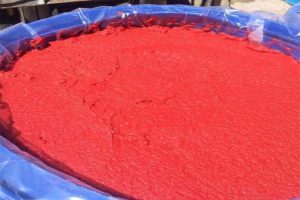
Iran is one of the largest tomato producers in the Middle East, processing a significant portion of its annual tomato harvest into premium-quality tomato paste for both domestic consumption and international markets.
In recent years, Iran has exported approximately 235,000 to 240,000 metric tons of tomato paste annually. A substantial share of these exports consists of bulk tomato paste and aseptic tomato paste, serving different industries and customer requirements worldwide.
To meet international quality standards, Iranian manufacturers carefully control:
- Brix concentration
- Natural tomato color
- Flavor consistency
- Product purity
- Food safety standards
- International quality certifications
Depending on customer requirements, tomato paste can be supplied in large steel drums for industrial use or in aseptic packaging, which extends shelf life without refrigeration.
Bulk vs. Aseptic Tomato Paste Export
Understanding the differences between bulk and aseptic packaging helps importers choose the most suitable option for their market.
Bulk Tomato Paste Export
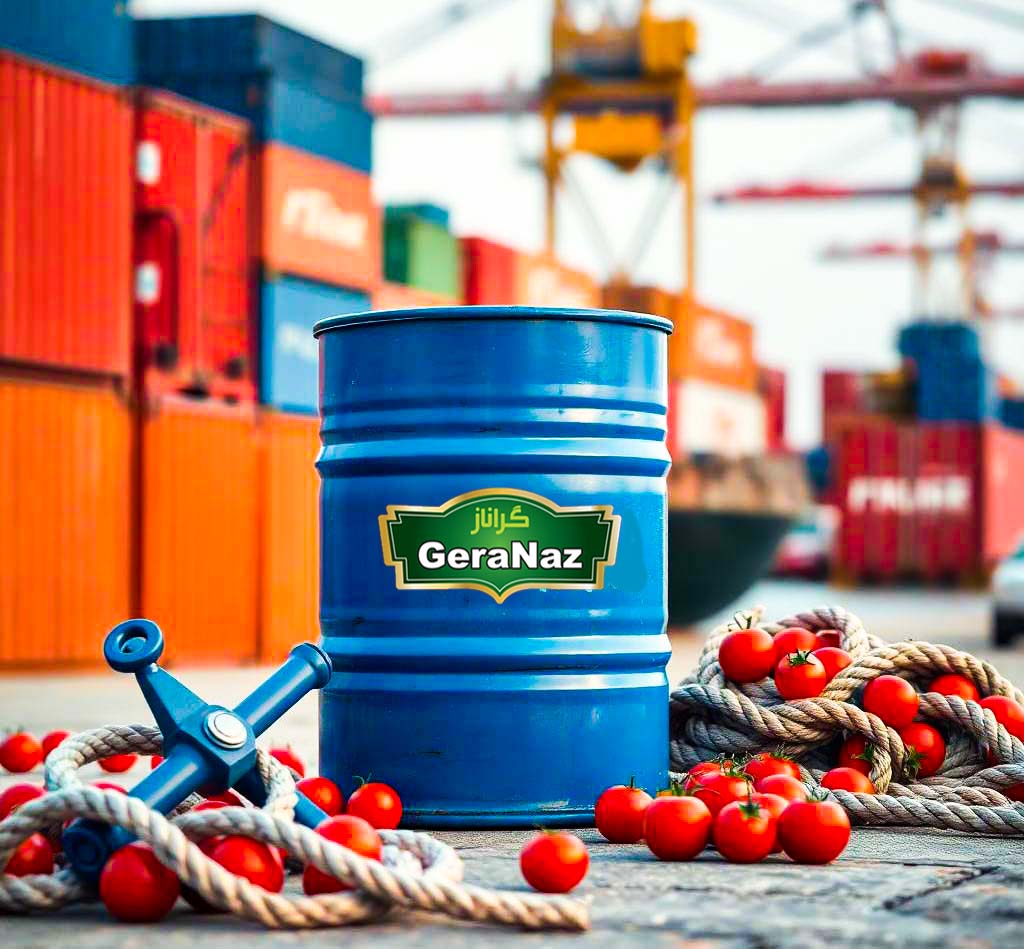
Bulk tomato paste is commonly packed in 220–235 kg steel drums or transported in specialized food-grade containers.
This packaging method is mainly intended for:
- Food manufacturers
- Sauce producers
- Ketchup factories
- Industrial food processors
Advantages of Bulk Export
- Lower packaging costs
- Reduced transportation expenses
- Ideal for large-volume purchases
- Competitive pricing
- Suitable for industrial production
Because of its lower overall cost, bulk tomato paste is particularly attractive in price-sensitive markets.
Aseptic Tomato Paste Export
Aseptic tomato paste is processed and packaged in a completely sterile environment, preventing contamination while preserving the product’s natural quality.
Unlike conventional packaging, aseptic technology allows tomato paste to remain fresh for up to two years without refrigeration, making it an excellent solution for international trade.
Advantages of Aseptic Packaging
- Extended shelf life
- No cold storage required
- Excellent color retention
- Better flavor preservation
- Reduced product waste
- Higher value for international buyers
- Ideal for long-distance shipping
Aseptic packaging is especially popular in Europe, the Middle East, and premium retail markets, where product quality and long shelf life are essential purchasing factors.

Target Markets: Neighboring Countries with a Focus on Afghanistan
Why Afghanistan Is a Strategic Market
Afghanistan has become one of Iran’s most important export destinations for tomato paste. With a population of approximately 40 million people, increasing urbanization, and heavy reliance on imported food products, the country offers significant opportunities for Iranian exporters.
Several factors contribute to Afghanistan’s attractiveness as an export market:
- Geographic proximity
- Lower transportation costs
- Similar culinary preferences
- High demand for processed food products
- Strong regional trade relationships
These advantages enable Iranian exporters to deliver high-quality tomato paste quickly and competitively compared with suppliers from more distant countries.
Why the Afghan Market Is Attractive
Afghanistan offers numerous commercial benefits for tomato paste exporters.
Lower Logistics Costs
Compared with exports to Europe or Africa, transportation to Afghanistan is significantly less expensive due to the shared regional border.
Growing Consumer Demand
Tomato paste is widely used in Afghan households, restaurants, and food manufacturing businesses, creating stable year-round demand.
Easier Regional Trade
Trade procedures between Iran and Afghanistan are generally simpler than those involving more distant international markets, allowing exporters to move products more efficiently.
Expanding Retail Sector
As supermarkets and modern retail chains continue to grow in Afghanistan’s major cities, demand for premium packaged food products—including aseptic tomato paste—is expected to increase.
Afghanistan Compared with Other Neighboring Markets
Although Iraq remains the largest destination for Iranian tomato paste exports, Afghanistan has experienced remarkable growth in recent years and continues to strengthen its position as a valuable regional market.
Exports to Afghanistan generally include both bulk tomato paste for industrial food production and aseptic tomato paste for retail distribution and direct consumer use. As purchasing power and retail infrastructure continue to improve, demand for higher-quality packaged products is expected to increase.
Compared with many neighboring countries, Afghanistan offers several advantages:
- Short transportation distances
- Faster delivery times
- Lower logistics costs
- Strong demand for imported food products
- Long-term market growth potential
For exporters seeking stable regional expansion, Afghanistan represents an attractive market with considerable future opportunities.
Business Opportunities in Tomato Paste Export
Growing international demand presents numerous opportunities for Iranian manufacturers and exporters. Companies capable of maintaining consistent quality and complying with international standards are well positioned to strengthen their presence in regional and global markets.
Increasing Demand for Aseptic Packaging
One of the fastest-growing trends in the food industry is the increasing preference for aseptic tomato paste.
Because aseptic packaging offers a longer shelf life, improved product safety, and easier transportation, many importers now prefer this packaging method over conventional bulk shipments.
Exporters investing in aseptic production technology can benefit from:
- Higher profit margins
- Greater customer satisfaction
- Reduced product losses
- Access to premium international markets
- Stronger brand positioning
As consumer demand for high-quality packaged foods continues to rise, aseptic packaging is expected to play an increasingly important role in the future of tomato paste export.
Expanding Beyond Regional Markets
While neighboring countries remain the primary destinations for Iranian tomato paste, export opportunities continue to grow in international markets.
Iranian manufacturers have successfully supplied tomato paste to countries across:
- Europe
- Russia
- Central Asia
- The Middle East
- Africa
Increasing global demand for processed tomato products creates additional opportunities for exporters who meet international food safety, quality, and packaging requirements.
By continuously improving product quality and production efficiency, Iranian companies can strengthen their competitiveness in both established and emerging markets.
Building Strong Supply Chains
Long-term success in Tomato paste export depends not only on product quality but also on reliable business relationships.
Exporters can increase market share by:
- Partnering with trusted local distributors
- Developing efficient logistics networks
- Maintaining consistent product quality
- Ensuring timely deliveries
- Providing responsive customer service
Establishing a strong supply chain improves customer confidence and encourages repeat business, creating sustainable growth over time.
Challenges and Risks in Tomato Paste Export
Despite its strong potential, tomato paste export also involves several challenges that exporters should carefully consider.
Production and Climate Risks
Agricultural production is naturally influenced by weather conditions and environmental factors.
Water shortages, drought, extreme temperatures, or fluctuations in tomato harvests can affect production capacity and export volumes.
Manufacturers that invest in efficient processing technologies and stable sourcing strategies are generally better prepared to manage these challenges.
Intense Market Competition
Afghanistan and other regional markets are highly competitive.
Iranian exporters compete with suppliers from several countries, including:
- China
- Turkey
- India
- Pakistan
- Gulf countries
Competition is based on several important factors:
- Product quality
- Price competitiveness
- Packaging standards
- Delivery reliability
- Brand reputation
Companies that consistently deliver high-quality products while maintaining competitive pricing are more likely to secure long-term customers.
Customs Regulations and International Standards
Each importing country has its own food safety regulations, labeling requirements, and customs procedures.
Before entering a new market, exporters should carefully review:
- Import regulations
- Product labeling requirements
- Food safety standards
- Packaging specifications
- Required export documentation
Compliance with international standards not only facilitates customs clearance but also strengthens buyer confidence and supports long-term business relationships.
Conclusion
Iran continues to strengthen its position as one of the leading suppliers in the global tomato paste export industry.
Neighboring countries—particularly Afghanistan—offer excellent opportunities due to their geographic proximity, growing food demand, competitive transportation costs, and strong trade relationships with Iran.
At the same time, aseptic tomato paste is becoming increasingly popular because of its longer shelf life, superior product protection, and higher commercial value. As international buyers increasingly prioritize quality and convenience, aseptic packaging is expected to generate greater profit margins than traditional bulk exports.
To succeed in highly competitive international markets, exporters should focus on:
- Maintaining consistent product quality
- Meeting international food safety standards
- Investing in modern packaging technologies
- Conducting thorough market research
- Building reliable partnerships with local distributors
- Developing long-term export strategies
Although challenges such as climate fluctuations, price competition, and changing international regulations remain, companies that prioritize quality, innovation, and customer satisfaction will be well positioned for sustainable growth in global markets.
Frequently Asked Questions (FAQ)
1. What is the difference between bulk and aseptic tomato paste exports?
The main difference lies in the target market and packaging method.
Bulk tomato paste export is typically supplied in large steel drums (220–235 kg) for food manufacturers, sauce producers, and industrial processors. It offers lower packaging and transportation costs, making it ideal for high-volume buyers.
Aseptic tomato paste, on the other hand, is packed in a sterile environment, providing a shelf life of up to two years without refrigeration. It is commonly used for retail products, private-label brands, and premium international markets.
While both packaging options are popular in Afghanistan, bulk exports are generally preferred by local food manufacturers, whereas aseptic packaging is gaining demand in modern retail channels.
2. What Brix level is recommended for tomato paste exports to Afghanistan?
Most export-grade tomato paste is supplied with a Brix level of 28–30%, which provides an excellent balance between quality and competitive pricing.
Some industrial buyers may request a higher concentration of 36–38% Brix for specific food manufacturing applications.
For the Afghan market, however, 28–30% Brix remains the most common specification due to its affordability and suitability for local consumption.
3. What is the minimum order quantity (MOQ) for bulk tomato paste exports?
The standard minimum order quantity is usually one 20-foot shipping container, which can accommodate approximately:
- 80–100 steel drums
- Each drum weighing 220–235 kg
- Total shipment of approximately 20–24 metric tons
The final quantity may vary depending on customer requirements and commercial agreements.
4. What is Iran’s biggest advantage in exporting tomato paste to Afghanistan?
Iran enjoys several competitive advantages, including:
- Close geographic proximity
- Lower transportation costs
- Similar food culture and consumer preferences
- Strong regional trade relationships
- Competitive pricing compared with suppliers from China and Turkey
These advantages enable Iranian exporters to deliver products more efficiently and cost-effectively than many international competitors.
5. Which transportation routes are commonly used for exports to Afghanistan?
Most Tomato paste export shipments are transported by road through two major border crossings:
- Dogharoon Border Crossing (Razavi Khorasan Province)
- Milak Border Crossing (Sistan and Baluchestan Province)
Bulk shipments are transported using standard freight trucks, while aseptic products generally do not require refrigerated transportation because of their extended shelf life.
6. What documents are required for exporting tomato paste to Afghanistan?
Exporters typically need the following documents:
- Health Certificate
- Certificate of Origin
- Standard Compliance Certificate
- Laboratory Analysis Report
- Commercial Invoice
- Packing List
Compliance with both Iranian export regulations and Afghan import requirements is essential for smooth customs clearance.
7. What are the main risks of exporting Tomato paste
export to Afghanistan?
Some of the most common challenges include:
- Currency exchange fluctuations
- Political and regulatory changes
- Payment risks
- Intense price competition
To reduce financial risk, many exporters prefer advance payment terms or secure payment methods such as Letters of Credit (L/C).
8. Which countries are Iran’s main competitors in the Afghan market?
The primary competitors include:
- China
- Turkey
- Pakistan
Chinese suppliers often compete on price, particularly in the bulk segment, while Turkish manufacturers are recognized for strong branding, attractive packaging, and premium-quality products.
9. Why is aseptic packaging important for tomato paste exports?
Aseptic packaging offers several significant advantages:
- Long shelf life without refrigeration
- Better preservation of color and flavor
- Reduced product waste
- Lower storage costs
- Greater suitability for long-distance international shipping
As Afghanistan’s modern retail sector continues to expand, demand for aseptic tomato paste is expected to increase steadily.
10. Which is more profitable: bulk or aseptic Tomato paste exports?
The answer depends on your business strategy.
Bulk Tomato paste exports generally provide:
- Higher sales volume
- Lower profit margin per ton
- Faster market entry
Aseptic Tomato paste exports typically offer:
- Higher profit margin per ton
- Greater product value
- Better opportunities for branding
- Stronger customer loyalty
For companies seeking long-term growth and premium positioning, aseptic packaging is often the more strategic choice.
11. What pricing strategy works best in the Afghan market?
Afghanistan is a highly price-sensitive market.
A successful pricing strategy usually involves:
- Entering the market with competitive pricing
- Maintaining consistent product quality
- Building customer trust through reliable deliveries
- Gradually increasing sales volume and strengthening long-term partnerships
Competitive pricing combined with dependable quality is often the key to sustainable market expansion.
12. How can exporters increase their market share in Afghanistan?
Companies can strengthen their presence by:
- Partnering with reliable local wholesalers and distributors
- Offering flexible payment terms when appropriate
- Maintaining consistent product quality across every shipment
- Understanding local consumer preferences
- Designing bilingual Persian/Dari labels for retail products
- Investing in long-term customer relationships and after-sales support
A strong local distribution network, combined with high-quality products and professional branding, can significantly improve long-term success in the Afghan market.